

How to Care for Jute Products: The Complete Guide to Cleaning & Maintaining Jute Bags, Rugs & Baskets
You finally brought home a beautiful jute rug. Or a woven basket. Or a tote bag you plan to use every single day. And now — somewhere in the back of your mind — a quiet question surfaces: how do I actually take care of this thing?
It’s a fair question. Jute is not cotton. It is not synthetic. It behaves differently, it needs different care, and if you treat it like just another fabric, you will shorten its life significantly. But here’s the good news: jute is not high-maintenance. It just needs to be understood.
This guide will tell you everything you need to know — clearly, practically, and without unnecessary complication.
Understanding Jute First: Why Care Matters
Before we get into the how, it helps to understand the what.
Jute is a natural plant fiber. That naturalness is precisely what makes it beautiful — the warm golden tone, the organic texture, the way it softens slightly with use. But it is also what makes it different from synthetic materials when it comes to care.
Natural fibers have two primary vulnerabilities: moisture and prolonged direct sunlight.
Excessive moisture causes jute fiber to swell, weaken, and — if not dried properly — develop mildew or a musty odor. Prolonged exposure to direct sunlight causes the fiber to bleach and become brittle over time.
Neither of these things will happen if you care for your jute products correctly. And caring for them correctly is genuinely not complicated once you know the rules.
Let’s go through each product type one by one.
Part 1: How to Care for a Jute Rug or Carpet
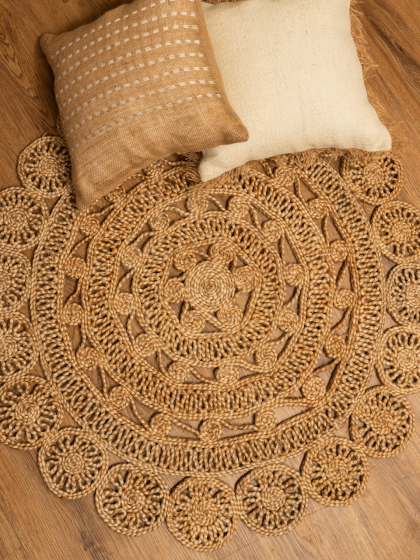
Jute rugs are among the most popular natural fiber floor coverings in the world — and for good reason. They are warm, textured, grounding, and beautiful. They also require a slightly different approach to cleaning than wool or synthetic rugs.
Everyday Maintenance
The single most effective thing you can do for a jute rug is also the simplest: vacuum it regularly.
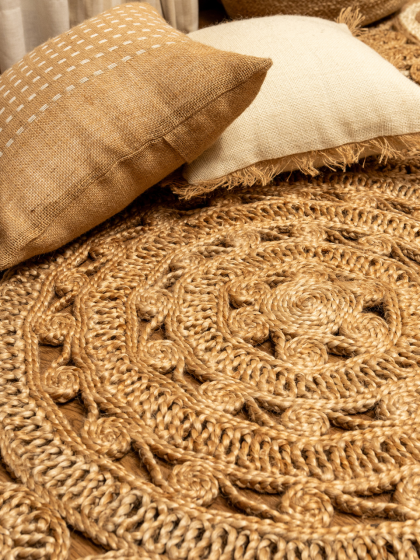
Jute fibers trap dust and grit deep in the weave over time. If that grit is left to accumulate, it works its way into the structure of the rug and begins to break down the fibers from the inside — a process you won’t notice until the damage is already done. Vacuuming once or twice a week prevents this entirely.
A few vacuuming tips specific to jute:
- Use a suction-only setting — avoid rotating brush attachments, which can snag and pull at the natural fibers.
- Vacuum in the direction of the weave, not against it.
- Lift the rug occasionally and vacuum the floor beneath it — dust accumulates under jute rugs and can travel upward.
Rotating Your Rug
If your rug sits in a spot that receives consistent foot traffic or direct sunlight from one direction, rotate it every three to six months. This distributes wear evenly and prevents one area from fading or flattening faster than the rest.
Dealing with Spills — Act Fast
Spills on a jute rug need to be dealt with immediately. The longer liquid sits on jute, the deeper it penetrates and the harder it becomes to remove.
What to do when a spill happens:
- Blot — do not rub — the spill immediately with a clean, dry cloth. Rubbing spreads the liquid and pushes it deeper into the fibers.
- Work from the outside of the spill inward to prevent spreading.
- Once the excess moisture is absorbed, allow the area to air dry completely. If possible, lift the rug slightly from the floor to allow air circulation underneath.
- For stubborn residue once fully dry, use a soft-bristled brush to gently loosen the dried material, then vacuum.
What not to do:
- Do not pour water over a stain on a jute rug. More moisture will make the problem significantly worse.
- Do not use a steam cleaner on jute — the concentrated heat and moisture combination is damaging to the fiber.
- Do not scrub. Ever.
Deeper Cleaning
Jute rugs should not be wet-washed at home. Unlike wool or cotton rugs, jute cannot be soaked or machine washed — doing so will cause the fibers to swell, warp, and potentially develop mildew.
For a deeper clean beyond regular vacuuming, use a dry cleaning powder specifically designed for natural fiber rugs. Sprinkle it evenly across the surface, work it gently into the pile with a soft brush, leave it for the recommended time, and then vacuum thoroughly.
For serious staining or a full deep clean, take your jute rug to a professional rug cleaner who has experience with natural fiber floor coverings. Tell them it is jute — the approach is different from synthetic rug cleaning and a good cleaner will know what to do.
Storage
If you need to store a jute rug for any period of time:
- Make sure it is completely clean and fully dry before storing. Even slight residual moisture can lead to mildew during storage.
- Roll the rug — never fold it. Folding creates permanent crease lines in jute that are very difficult to remove.
- Store it in a cool, dry, well-ventilated space. Avoid damp basements or sealed plastic bags, which trap moisture.
- Wrap it loosely in breathable fabric or paper — not plastic — to protect it from dust while allowing airflow.
Part 2: How to Care for a Jute Basket
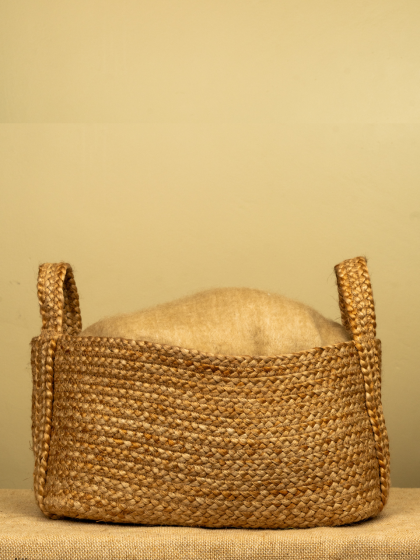
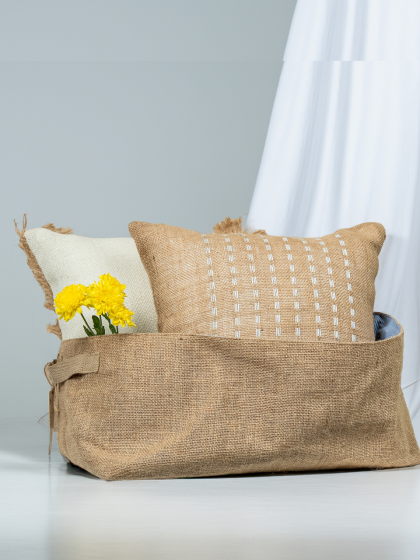
Jute baskets are among the most forgiving of all jute products to care for — their coiled, woven structure is naturally robust and requires very little intervention to keep looking good for years.
Daily Use and Placement
Jute baskets work best in dry indoor environments. They are perfect for living rooms, bedrooms, hallways, and home offices. Avoid using them in bathrooms or kitchens where humidity levels are consistently high — prolonged exposure to steam and moisture will weaken the coiled structure over time and can cause the basket to lose its shape.
If you love the look of jute in a bathroom, use the basket for dry items only — towels, toilet rolls, or small accessories — rather than as a storage solution for wet or damp items.
Dusting and Light Cleaning
Jute baskets collect surface dust in the texture of their weave. A quick dry dusting with a soft cloth or soft brush once a week is all that’s needed to keep them looking fresh.
For a slightly more thorough clean, use a dry paintbrush or a small clean pastry brush to work dust out of the coiled grooves. This is more effective than a cloth for getting into the textured surface, and takes about thirty seconds.
Spot Cleaning
If something spills on or inside your jute basket, blot the area immediately with a dry cloth to absorb as much of the liquid as possible. Then allow it to air dry completely before using it again.
If a small stain remains after drying, you can use a cloth very lightly dampened — not wet — with plain cold water to dab at the area. The key word here is dab, not rub. Once done, allow the basket to dry fully in a well-ventilated spot away from direct sunlight.
For tougher stains, a tiny amount of mild soap diluted heavily in cold water, applied with a lightly dampened cloth, will usually do the job. After cleaning, wipe the area with a clean damp cloth to remove any soap residue, then dry thoroughly.
Maintaining the Shape
One of the greatest things about well-made jute baskets is their structural memory — they hold their shape reliably. To help them stay that way:
- Don’t overload them beyond their capacity. Jute is strong, but sustained overloading will stretch the base and sides over time.
- If a basket is stored empty for a long period, stuff it loosely with crumpled paper to help it retain its form.
- If the base flattens slightly from heavy use, remove the contents and allow the basket to sit empty for a day or two — it will often bounce back.
Part 3: How to Care for a Jute Bag or Tote
Jute bags are built for daily use — and with the right care, they will hold up to that daily use for years. Here is how to keep yours looking and functioning at its best.
Everyday Use Tips
- Don’t overfill your jute bag. Every bag has a comfortable weight capacity. Consistently overloading it stresses the handles and seams. Jute is strong, but it is not indestructible.
- Avoid leaving your bag in direct sunlight for extended periods — for example, on a hot car dashboard or a sunny windowsill. Prolonged UV exposure bleaches and weakens jute fiber over time.
- Keep it away from water when possible. Jute handles occasional light contact with moisture just fine, but you don’t want your bag getting thoroughly soaked in heavy rain. If it does get very wet, reshape it by hand and allow it to dry naturally in a well-ventilated area.
Spot Cleaning
For small stains or marks — which are inevitable if you use your bag regularly — spot cleaning is your go-to approach.
How to spot clean a jute bag:
- Let any wet stain dry first if possible — dried stains are often easier to address without spreading moisture further into the fiber.
- Use a soft brush to gently loosen any dried surface residue.
- Mix a small amount of mild, natural soap with cold water until it forms a light lather.
- Dip a clean cloth into the solution, wring it out well so it is barely damp, and gently dab at the stain.
- Follow with a clean cloth dampened with plain cold water to remove any soap residue.
- Allow to air dry completely — reshape the bag by hand while it is still slightly damp if needed.
What to Absolutely Avoid
- Do not machine wash a jute bag. The agitation and prolonged water exposure will damage the fibers, cause shrinkage, and potentially cause the bag to lose its structure entirely.
- Do not tumble dry. Heat is damaging to jute fiber.
- Do not iron directly on jute. If your bag develops wrinkles, use a steam iron held a few centimetres above the surface — never directly on it — to gently relax the fibers.
- Do not use bleach or harsh chemical cleaners. These break down natural fibers quickly and will cause discoloration.
Storing Your Jute Bag
When you are not using your jute bag, store it in a cool, dry place with good ventilation. Avoid storing it in a sealed plastic bag — natural fibers need to breathe. If you want to protect it from dust, use a breathable fabric dust bag instead.
If you are storing it for a longer period, stuff it loosely with tissue paper to help it keep its shape.
General Rules for All Jute Products
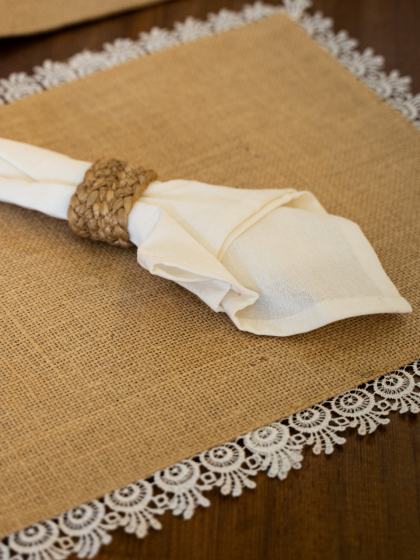
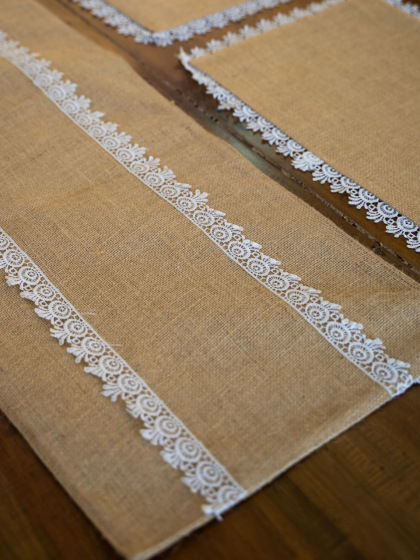
Across all jute products — rugs, baskets, bags, table mats, and runners — a few universal rules apply:
Moisture is the main enemy. Keep all jute products as dry as possible. When they do get damp, dry them thoroughly and quickly in a well-ventilated spot before storing or using again.
Sunlight in moderation. A beautifully lit room is fine. Sustained, direct, intense sunlight on a daily basis will fade and weaken jute over time.
Gentle is always right. Whether cleaning, brushing, or handling, gentle treatment preserves jute far longer than aggressive methods. You will never regret being too careful with a natural fiber.
Let it breathe. Natural fibers need airflow. Storage in sealed, airless spaces creates conditions for mildew and musty odors. Always store jute in breathable environments.
Address problems early. A small stain dealt with immediately is a small stain. A small stain left for a week becomes a permanent mark. The same is true for moisture — a slightly damp basket that is dried quickly is fine. A slightly damp basket that is left in a sealed bag for two weeks is a problem.
A Final Word
Jute products are not fragile. They are built from one of the toughest natural fibers on the planet, and with basic care, they will reward you with years of reliable, beautiful use.
The rules are simple: keep them dry, clean them gently, let them breathe, and deal with spills and problems promptly. Do those things and your TheKosha jute rug, basket, or bag will look good and last long — exactly as it was designed to.
Shop the TheKosha Jute Collection
Looking for a jute product that will stand the test of time? Browse TheKosha’s full range — all made in Nepal from 100% natural jute fiber.
👉 Shop Rugs & Carpets | Shop Baskets | Shop Bags & Totes
Have a care question we haven’t covered? Contact us — we are always happy to help.